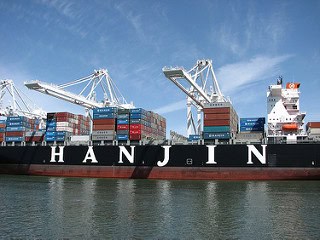
On August 31, 2016, Hanjin Shipping filed for bankruptcy protection. Ports refused to accept containers from the company or started charging exorbitant rates, out of fear they wouldn’t be compensated. The collapse of Hanjin Shipping is the largest container shipping bankruptcy in history, and its effect on international supply chains is poignant. Check out what other shipping companies can learn from the bankruptcy.
This article is for Premium Members only. Please login below to read the rest of this article.
Not a Premium Member yet? Join today.
[login_form redirect=’https://www.ethanhathaway.com/’]
[show_to accesslevel=’Premium Members’]
Situation: Hanjin Shipping Files for Bankruptcy
The global financial crisis in 2008 caused the container shipping industry to lose $15 billion in revenue. Hanjin Shipping lost $1.1 billion in 2009 alone and has struggled to recover ever since. The U.S. recession hurt the container shipping industry tremendously, but there was also a Eurozone crisis that affected 22.7 percent of Hanjin’s revenue and an economic slowdown in China affecting investors. Matters were complicated further by the fact that several mega container ships were ordered to support demand and growth that wasn’t there.
By 2016, Hanjin Shipping had accrued more than $5 billion in debt. The company handed over control of operations to the Korea Development Bank, its largest creditor. Then, negotiations started in an attempt for Hanjin to secure lower charter rates from ship owners. This proved unsuccessful and was deemed illegal by Seaspan. Hanjin creditors backed off amidst rumors of missed payments at ports, and this led to Hanjin’s eventual bankruptcy filing in South Korean court. Hanjin Shipping was one of the largest container shipping companies in the world, and its bankruptcy shocked the industry.
Approach: Bad Debt Management and Loss of Creditors
Hanjin Shipping tried for months to restructure its debt and raise liquidity with creditors without success. As a result, bankruptcy was inevitable. Shippers panicked and began taking control of their containers to avoid inventory loss. Major companies like Wal-Mart, Kroger, Ashley Furniture, and Forever 21 were affected.
The Hanjin Shipping bankruptcy came at a bad time for holiday retailers who worried of merchandise shortages. Nearly 100 of Hanjin’s vessels were stranded because ports didn’t want to unload them. The U.S. court granted creditor protection to Hanjin to help get vessels unloaded at American ports, but there were still logistical problems and delays. Plus, Hanjin complained of price gouging.
Impact and Advantage
International supply chains were drastically affected by the Hanjin Shipping bankruptcy. It’s clear that retailers need to prepare for disruptions to avoid chaos and maintain supply chain continuity during crisis. It’s never a good idea to rely solely on one shipper, even if it’s a big company.
Holiday shoppers at the end of 2016 were faced with higher prices because some companies weren’t able to keep up with shopper demands. Many retailers learned the importance of optimizing each location’s inventory capacity, as well as diversifying its supply chain.
The Hanjin Shipping bankruptcy is complicated because the company is in an alliance with several other shippers, and the sheer container volume the company handles each year is impressive. It will take time for Hanjin Shipping to sell entities and achieve stability. Other shippers can learn from the bankruptcy by preparing risk management plans and being more careful with investments in case of recession.[/show_to]